Gut microbiota remotely modulate systemic energy metabolism via persulfidation
Prinicipal Investigator
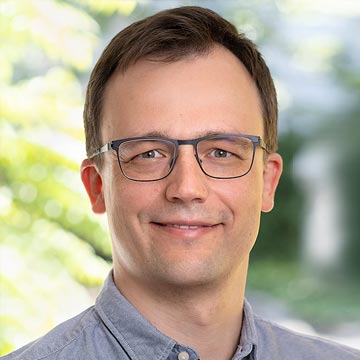
Dr. István András Szijarto, PhD
Scientific interest within the context of the graduate college
Scientific interest centers on the molecular mechanisms that preserve health and resilience with focus on microbiome-host crosstalk, especially microbiome-derived hydrogen sulfide, protein persulfidation, and systemic energy metabolism in organ function. This aligns with the goals of Re-Thinking Health, which aims to define health-preserving pathways and translate them into prevention-oriented strategies.
Project description
Our research group is investigating the role of the microbiome in kidney and cardiovascular diseases.1,2 Interestingly, patients with kidney disease face a substantial cardiovascular risk.3 An altered microbiome may contribute to an increased cardiovascular risk in the presence of existing kidney dysfunction.4 However, the exact mechanisms remain poorly understood, leading to a lack of therapeutic options. We are particularly interested in the molecules that mediate the interaction between the microbiome and host cells.5-9
Hydrogen sulfide (H2S) is best known as the gas that smells like rotten eggs, yet in the body it also acts as an important signaling molecule.10 It can modify proteins through persulfidation, influence mitochondrial energy production, and shape inflammatory responses. These functions are highly relevant to common chronic diseases such as heart failure and chronic kidney disease. The intestinal microbiota is a major source and regulator of H2S, but we still do not know how microbiome-derived H2S reaches distant organs, how it changes tissue function, or whether this pathway can be harnessed therapeutically.
Our hypothesis is that microbiome-derived H2S supports systemic resilience by maintaining organ-specific persulfidation patterns and efficient cellular energy metabolism. Loss or dysregulation of this pathway increases susceptibility to heart, kidney, and immune dysfunction, particularly under stress. This proposal aims to define the mechanistic link between gut microbial H2S production and remote organ function in a biologically innovative and clinically relevant manner.
Aim 1: Define how the microbiome regulates systemic H2S. We will identify how the microbiome contributes to systemic H2S homeostasis. Using germ-free and colonized mice, together with human microbiome samples, we will profile microbial pathways involved in H2S production by shotgun sequencing and targeted qPCR. We will then quantify H2S levels, key precursors, and protein persulfidation across the gut and distant organs to test whether a measurable gut-to-organ gradient exists. In parallel, we will assess host H2S -producing and H2S -metabolizing enzymes to determine whether the microbiome also alters host H2S synthesis or breakdown.
Aim 2: Test how microbial H2S shapes remote organ resilience. We will test how microbiome-derived H2S affects the heart, kidney, immune system, and intestine. We propose that reduced microbial H2S alters the persulfidome and weakens mitochondrial function in energy-demanding tissues. Germ-free and colonized mice will be compared at baseline and in a stress model of heart failure with kidney injury. Organ phenotypes will be linked to bioenergetics, inflammation, and tissue persulfidation, while rescue experiments with an oral H2S donor will test causality.
Aim 3: To strengthen translational relevance. We will assess the H₂S-producing capacity of the microbiota in patients with end-stage kidney disease compared to healthy controls to determine whether modulation of microbial H₂S production could serve as a novel strategy to enhance resilience and limit organ damage.
References
- Wilck N, Matus MG, Kearney SM, Olesen SW, Forslund K, Bartolomaeus H, Haase S, Mähler A, Balogh A, Markó L, Vvedenskaya O, Kleiner FH, Tsvetkov D, Klug L, Costea PI, Sunagawa S, Maier L, Rakova N, Schatz V, Neubert P, Frätzer C, Krannich A, Gollasch M, Grohme DA, Côrte-Real BF, Gerlach RG, Basic M, Typas A, Wu C, Titze JM, Jantsch J, Boschmann M, Dechend R, Kleinewietfeld M, Kempa S, Bork P, Linker RA, Alm EJ, Müller DN. Salt-responsive gut commensal modulates TH17 axis and disease. Nature. 2017; 551(7682): 585-589.
- Holle J, Bartolomaeus H, Löber U, Behrens F, Bartolomaeus TUP, Anandakumar H, Wimmer MI, Vu DL, Kuhring M, Brüning U, Maifeld A, Geisberger S, Kempa S, Schumacher F, Kleuser B, Bufler P, Querfeld U, Kitschke S, Engler D, Kuhrt LD, Drechsel O, Eckardt KU, Forslund SK, Thürmer A, McParland V, Kirwan JA, Wilck N, Müller D. Inflammation in children with CKD linked to gut dysbiosis and metabolite imbalance. J Am Soc Nephrol. 2022; 33(12): 2259-2275.
- Go AS, Chertow GM, Fan D, McCulloch CE, Hsu CY. Chronic kidney disease and the risks of death, cardiovascular events, and hospitalization. New Engl J Med. 2004; 351(13): 1296-1305.
- Bloom PP, Garrett WS, Penniston KL, Winkler MH, Hazen SL, Agudelo J, Suryavanshi M, Babiker A, Dodd D, Fischbach MA, Huang KC, Huttenhower C, Joe B, Kalantar-Zadeh K, Knight R, Miller AW, Rabb H, Srivastava A, Tang WHW, Turnbaugh PJ, Walker AW, Wilck N, Xu J, Yang T, Himmelfarb J, Redinbo MR, Wu GD, Woodworth MH, Ackerman AL, Winter S, Rinschen MM, Hassan HA, Biruete A, Anderson AH, Pluznick JL. Microbiota and kidney disease: the road ahead. Nat Rev Nephrol. 2025; 21(10): 702-716.
- Yarritu A, Anders W, Thiele A, Potapenko O, Schumacher F, Szijártó IA, Matz-Rauch A, Versnjak J, Gebremedhin N, McParland V, Heckscher S, Kamboj S, Trimarchi G, Anandakumar H, Fuckert F, Hoffmann C, Hassan SA, Bonnekoh PM, Wimmer MI, Behrens F, Voelkl J, Kramann R, Kintscher U, Kuehne T, Kleuser B, Zernecke A, Oefner PJ, Gronwald W, Dettmer K, Eckardt KU, Müller DN, Kelm M, Holle J, Bartolomaeus H, Wilck N. Kidney disease reprograms microbiome-host signaling to promote heart failure. bioRxiv. 2026. 2026.2001.2010.698142.
- Wimmer MI, Reichel M, Thiele A, Yarritu A, Matz-Rauch A, Anandakumar H, Götz LH, Lesker TR, Potapenko O, Gebremedhin N, Anders W, Liévano Contreras SV, Wang R, Nonn O, Schiattarella GG, Schaefer F, Holle J, Strowig T, Zernecke A, Eckardt KU, Knauf F, Wilck N, Bartolomaeus H. Interleukin-17A mediates cardiorenal injury in oxalate nephropathy. bioRxiv. 2025. 2025.2011.2017.687153.
- Wimmer MI, Bartolomaeus H, Anandakumar H, Chen CY, Vecera V, Kedziora S, Kamboj S, Schumacher F, Pals S, Rauch A, Meisel J, Potapenko O, Yarritu A, Bartolomaeus TUP, Samaan M, Thiele A, Stürzbecher L, Geisberger SY, Kleuser B, Oefner PJ, Haase N, Löber U, Gronwald W, Forslund-Startceva SK, Müller DN, Wilck N. Metformin modulates microbiota and improves blood pressure and cardiac remodeling in a rat model of hypertension. Acta Physiol (Oxf). 2024; 240(11): e14226.
- Bartolomaeus H, Balogh A, Yakoub M, Homann S, Markó L, Höges S, Tsvetkov D, Krannich A, Wundersitz S, Avery EG, Haase N, Kräker K, Hering L, Maase M, Kusche-Vihrog K, Grandoch M, Fielitz J, Kempa S, Gollasch M, Zhumadilov Z, Kozhakhmetov S, Kushugulova A, Eckardt KU, Dechend R, Rump LC, Forslund SK, Müller DN, Stegbauer J, Wilck N. Short-chain fatty acid propionate protects from hypertensive cardiovascular damage. Circulation. 2019; 139(11): 1407-1421.
- Bartolomaeus H, Avery EG, Bartolomaeus TUP, Kozhakhmetov S, Zhumadilov Z, Muller DN, Wilck N, Kushugulova A, Forslund SK. Blood pressure changes correlate with short-chain fatty acid production potential shifts under a synbiotic intervention. Cardiovasc Res. 2020; 116(7): 1252-1253.
- Filipovic MR, Zivanovic J, Alvarez B, Banerjee R. Chemical Biology of H2S Signaling through Persulfidation. Chem Rev. 2018; 118(3): 1253-1337.